
Introduction to Cybersecurity
Protecting Your Digital World in an Increasingly Connected South Africa
Cybersecurity is the practice of protecting systems, devices, networks, and data from digital attacks. These attacks are often carried out by threat actors — individuals or groups who attempt to gain unauthorised access to information for financial gain, identity theft, espionage, disruption, or fraud. In South Africa, cybercrime continues to rise as businesses and individuals rely more on online banking, cloud services, remote work, and mobile technology.
Your business and personal data have value. Financial records, emails, passwords, and critical systems can be sold, exploited, or used to impersonate you or your organisation. Cybersecurity solutions help reduce risk, maintain privacy, support compliance with local regulations like POPIA, and keep you in control of your digital environment.
The good news? With the right protection in place, cyber threats can be prevented, detected, and quickly contained.
Secure your Business & Get Protected Today with MacRoots!
Cyber threats are evolving — your protection should too. Whether you’re a small business or an enterprise, we’ll help you understand your risks and design a cybersecurity strategy that fits your needs for a phased approach that suits your budget.
Contact us today for a free cybersecurity assessment or consultation.
Contact Us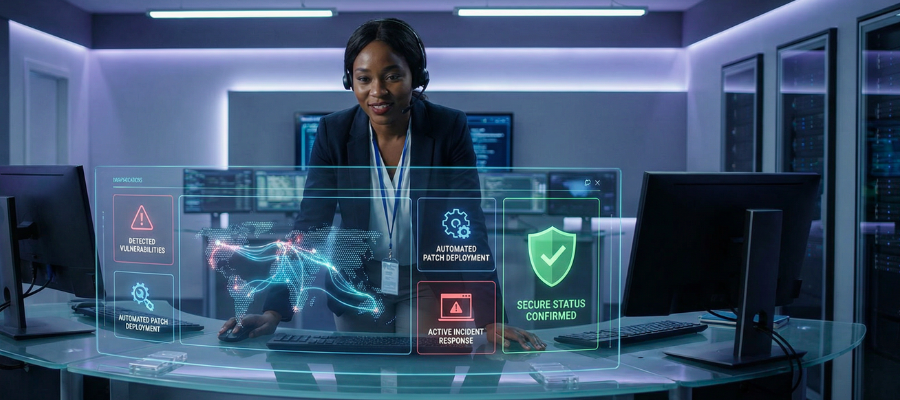
Vulnerability Management
Identify Weaknesses Before Cybercriminals Do
Vulnerability Management focuses on continuously identifying, prioritising, and addressing security weaknesses across your IT environment. Every device, system, and application can contain vulnerabilities — outdated software, misconfigurations, or missing patches — that threat actors actively search for.
Our Vulnerability Management solutions provide ongoing visibility into your digital assets, helping you understand where risks exist and which issues require urgent attention. This proactive approach reduces attack surfaces, supports compliance requirements, and strengthens your overall cybersecurity posture.
Our offerings for Vulnerability Management are paired with ongoing vulnerability remediation to ensure continuous strengthening of your security posture.
Key benefits include:
- Continuous vulnerability scanning
- Risk-based prioritisation
- Asset management
- Patch and configuration visibility
- Improved compliance and audit readiness

Endpoint Protection
Securing Every Device That Connects to Your Business
Endpoint Protection safeguards the devices people use every day — including laptops, desktops, servers, tablets, and mobile phones. These endpoints are often the first targets for malware, ransomware, phishing, and credential theft.
Our endpoint security solutions deliver advanced threat protection, behavioural detection, and real-time response across all supported devices. Whether employees work in the office, remotely, or on the move, their devices remain protected against known and emerging threats.
Coverage includes:
- Windows and macOS laptops and desktops
- Servers and virtual machines
- Android and iOS mobile devices
- Built-in antivirus and anti-malware
- Endpoint detection and response (EDR)
- Disk encryption and application control
Device Management
Secure, Manage, and Control Devices from Anywhere
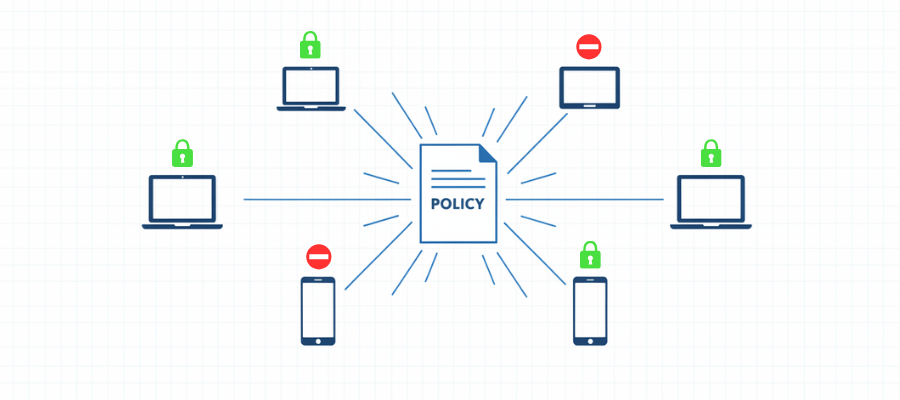
Device Management ensures that company-owned and personal devices are securely configured, monitored, and maintained throughout their lifecycle. This is especially important in hybrid and remote working environments common across South Africa.
Our solutions allow centralised control of device policies, updates, access rules, and security settings — ensuring consistency, reducing human error, and improving compliance.
Key capabilities include:
- Mobile and endpoint device management (MDM)
- Secure onboarding and offboarding
- Policy enforcement and compliance monitoring
- Remote device configuration and wipe
- Support for bring-your-own-device (BYOD)
Outsourcing your storage and backup needs to MacRoots is a strategic move!
Storage solutions improve productivity and collaboration, while backups ensure your data remains safe and recoverable. Both are critical for a robust IT strategy.
Mail Security
Defending Against Phishing, Fraud, and Email-Based Attacks
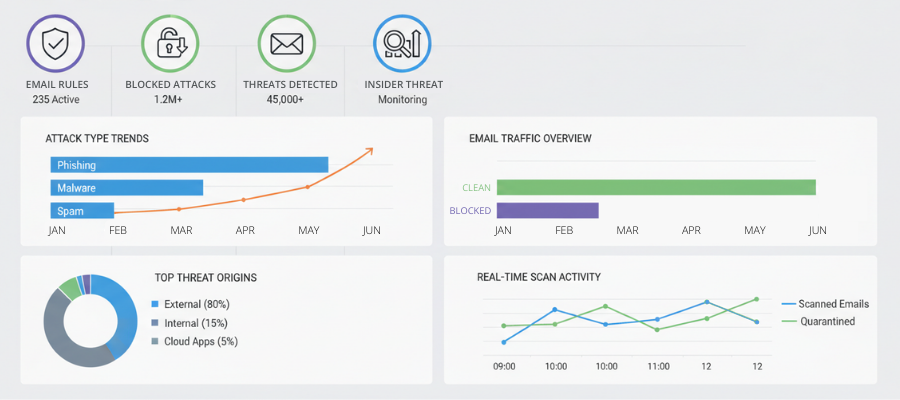
Email remains the most common entry point for cyberattacks. Phishing emails, malicious attachments, and business email compromise scams are increasingly sophisticated and difficult to spot.
Our Mail Security solutions protect users by filtering threats before they reach the inbox, analysing links and attachments, and preventing impersonation attempts.
Protection includes:
- Anti-spam and anti-phishing controls
- Business email compromise (BEC) protection
- Malicious link and attachment scanning
- Email authentication and spoofing prevention
- Encryption for sensitive communications
- Role based security policies
Firewall & Network Security
Protecting Data as It Moves Across Your Network
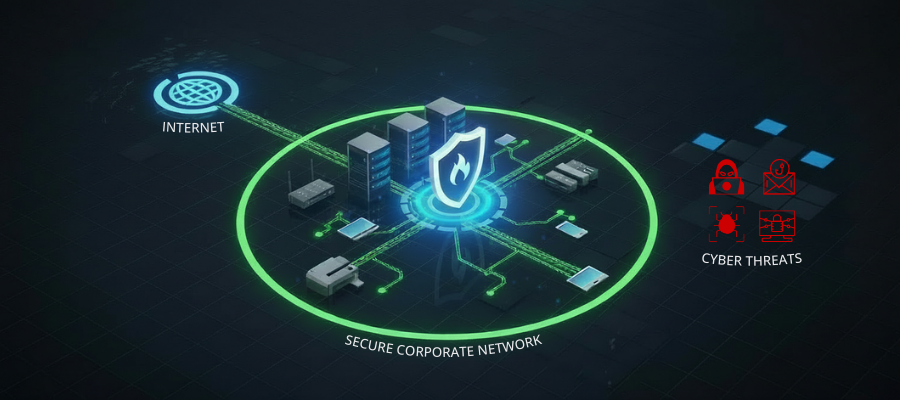
Firewall and Network Security solutions protect your internal network and internet-facing services from unauthorised access, attacks, and data leakage. This includes both physical firewalls installed on-site and cloud-based firewalls protecting online applications and remote users.
Our network security approach ensures traffic is inspected, filtered, and monitored to stop threats before they cause damage.
Protection includes:
- Next-generation firewall protection
- Intrusion detection and prevention
- Secure web gateways and DNS security
- DDoS protection and mitigation
- Network segmentation and VPN access
- Email, email attachment and file sandboxing

Digital Identity Protection
Secure Access with Cloud Identity and Access Management
Digital Identity Protection ensures that only the right people can access your systems, applications, and data. Cloud-based identity and access management reduces reliance on passwords alone and limits the damage caused by compromised credentials.
By implementing Multi-Factor Authentication (MFA) and Single Sign-On (SSO), users gain secure, seamless access while organisations maintain strong control over identities.
Key identity security features include:
- Centralised identity management
- Multi-factor authentication (MFA)
- Single sign-on (SSO)
- Conditional and risk-based access policies
- Privileged access controls
Disaster Recovery
Ensuring Continuity After a Cyber Incident
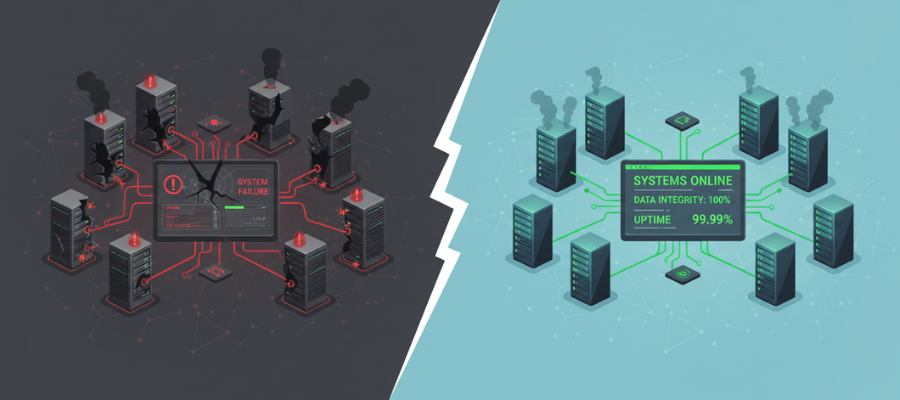
Disaster Recovery focuses on restoring systems and security operations after a cyber incident such as ransomware, system compromise, or infrastructure failure. Rather than focusing on file storage alone, our approach ensures that security services, access controls, endpoints, networks, and user or company data can be rapidly recovered.
This minimises downtime, protects business operations, and supports business continuity planning.
Disaster recovery coverage includes:
- Recovery of security configurations and policies
- Endpoint and identity restoration
- Network and firewall recovery
- Incident response readiness
- Reduced operational downtime
Secure Your Business. Stay Compliant. Stay Operational.
Talk to our team about cybersecurity solutions aligned with your business and regulatory needs. Book a consultation to understand your cyber risks and the steps needed to reduce them.
Contact UsFrequently Asked Questions
Helping you to Understand the Basics and Benefits
Cybersecurity is the practice of protecting computers, networks, devices, and data from unauthorised access, cybercrime, and digital attacks. It is important because cyber incidents can lead to financial loss, identity theft, operational downtime, and reputational damage. In South Africa, cybersecurity also supports compliance with laws such as POPIA.
Threat actors are individuals or organised groups who attempt to exploit systems, data, or users for malicious purposes. These can include cybercriminals seeking financial gain, scammers running phishing campaigns, ransomware groups, or insiders abusing access. Their methods range from simple email attacks to advanced, targeted intrusions.
Cybercriminals target businesses of all sizes because any organisation with data, email access, financial systems, or online services has value. Small and medium businesses are often targeted because they may have fewer security controls, making them easier entry points for fraud, ransomware, or data theft.
No, cybersecurity is essential for organisations of every size. In fact, small and medium businesses in South Africa are frequently targeted because attackers assume they have weaker defences. Even a single compromised device or email account can lead to financial loss, downtime, or legal consequences.
Endpoint protection should be applied to all devices that connect to business systems or data. This includes laptops, desktop computers, servers, tablets, and mobile phones. With remote and hybrid work being prevalent, securing every endpoint helps prevent malware, ransomware, and unauthorised access.
Vulnerability management helps organisations identify, assess, and prioritise security weaknesses across their IT environment. By continuously scanning systems and devices, businesses can fix critical issues before attackers exploit them. This proactive approach reduces risk, improves security posture, and supports regulatory compliance.
Phishing is a type of cyberattack where criminals trick users into revealing sensitive information such as passwords, banking details, or login credentials. These attacks usually arrive via email, SMS, or messaging platforms and are designed to look legitimate, making user awareness and email security essential.
Yes, email security plays a critical role in stopping ransomware attacks. Many ransomware infections begin with malicious email attachments, links or impersonation attempts. Advanced email security solutions scan messages, block suspicious content, and prevent users from interacting with harmful emails before damage occurs.
A firewall is a security system that monitors and controls incoming and outgoing network traffic based on defined security rules. It acts as a barrier between trusted internal systems and untrusted external networks, helping prevent unauthorised access, malware infections, and data leakage.
Yes, cloud-based firewalls are designed to protect users regardless of their physical location. They secure internet access for remote and hybrid workers by inspecting traffic, enforcing tailored security policies, and preventing access to malicious websites or applications, even when employees are working outside the office.
Multi-Factor Authentication (MFA) is a security method that requires users to verify their identity using more than just a password. This typically includes something they know, something they have, or something they are, such as a master password or One-Time Pin (OTP / Authentication Code). MFA significantly reduces the risk of account compromise and credential theft.
Single Sign-On (SSO) allows users to access multiple systems or applications using one secure login. This improves user experience while reducing password fatigue and security risks and as a best practice generally secured with MFA. When combined with strong authentication controls, SSO helps organisations maintain both convenience and security.
Identity protection reduces risk by ensuring only authorised users can access systems and data. It limits the damage caused by stolen credentials through access controls, authentication policies, and monitoring of unusual behaviour. This is especially important for cloud services and remote access environments.
Device management is the centralised control of devices used within an organisation. It ensures devices are securely configured, updated, and compliant with security policies. This helps reduce misconfigurations, enforce security standards, and protect company data across both company-owned and personal devices.
Yes, personal devices can be secured through well-defined Bring Your Own Device (BYOD) policies. These controls allow organisations to protect business data without invading personal privacy, using measures such as device compliance checks, secure access rules, and remote data removal when necessary.
DDoS protection defends against Distributed Denial-of-Service attacks, which attempt to overwhelm systems with excessive traffic. These attacks can disrupt websites, online services, and business operations. Effective DDoS protection ensures systems remain available and accessible, even during large-scale attack attempts.
Yes, cybersecurity is a key component of POPIA compliance. The Act requires organisations to implement appropriate technical and organisational safeguards to protect personal information. Failing to secure data can result in legal penalties, reputational damage, and loss of customer trust.
During a cyber incident, affected systems are identified and isolated to prevent further damage. Threats are removed, vulnerabilities addressed, and security controls restored. An effective response focuses on minimising downtime, protecting data, and ensuring business operations can safely resume.
Disaster recovery is the process of restoring systems, security services, and operations after a major disruption such as a cyberattack or system failure. It ensures that essential services, access controls, and network security can be recovered quickly to support business continuity.
Recovery times vary depending on planning, system complexity, data size and preparedness. Organisations with tested disaster recovery plans can restore services significantly faster. Proper preparation reduces downtime, limits operational impact, and helps businesses return to normal operations with minimal disruption.
Endpoint Detection and Response (EDR) is an advanced security capability that continuously monitors devices for suspicious behaviour. It enables rapid detection, investigation, and automated response to threats, helping contain attacks before they spread across the organisation.
Yes, mobile devices pose a higher risk because they are frequently used for email, messaging, and cloud applications. They are also more likely to connect to public networks. Securing mobile devices helps prevent data leakage, malware infections, and unauthorised access.
Vulnerabilities should be scanned continuously or at regular intervals, depending on business needs. Frequent scanning ensures new risks are identified early, especially as systems change, updates are applied, or new devices are added to the environment.
All industries that use digital systems need cybersecurity. This includes finance, healthcare, legal, manufacturing, retail, education, and professional services. Any organisation handling data, payments, or online services is exposed to cyber risk.